FOUNDER-LEDPRODUCT COMPANYAGENT INFRASTRUCTURE
WEVER LABS / HUMAN-DIRECTED, AGENT-EXECUTED
We build the rails agents can work through.
Wever Labs turns human intent into products agents can discover, call, and verify. The portfolio spans market intelligence, tokenized-asset diligence, agent infrastructure, and Wever Pay, our flagship agentic exchange for autonomous commerce.
Wever Labs is the parent company. Wever Pay operates as an independent agentic exchange and public Base Sepolia testnet system.
Parent companyFounder, portfolio, agent infrastructure, and company contact.
Flagship productWever Pay has a direct independent product site and machine surface.
Truthful evidenceTestnet proof is labeled. Organic outside-agent use remains zero.
Live Wever Pay preview
Six lanes. One verifiable outcome.
Seller
52 discoveriessigned offer and fulfillmentVerifier
46 passes3 failed checks retainedAuditor
MATCHED0 duplicate effectsRecovery
49 eventsdurable replay-safe stateDistribution
CLEAN2 unsafe attempts suppressedMotion shows lane state and refresh cadence. It does not represent a new transaction on every pulse.
The assurance layer
Payment is one event. Commerce is the whole chain.
A signed offer is only the beginning. Wever Pay binds delegated authority, agent request, conditional settlement, verified fulfillment, independent evidence, economic history, and portable receipts into one outcome.
Authority that travels with the agent.
Owners constrain agents, sellers, services, assets, budgets, evidence, replay, and revocation before any economic tool is available.
Payment belongs to an approved outcome.
x402 exact settlement is evaluated against the offer and mandate, then reconciled with fulfillment and ledger effects.
Trust can be recomputed elsewhere.
Portable bundles let independent verifiers recompute the authority, settlement, evidence, receipt, and index chain.
Current public evidence
A live testnet system with explicit boundaries.
Phase 5A and Phase 5B passed. MCP, A2A, x402, and the signed Commerce Index are operational. Autonomous maintenance runs every 15 minutes and distribution expansion runs daily.
Propagation note
Bazaar semantic propagation remains pending. The MCP Registry exact version endpoint is live, while search projection may lag.
- Release
- 1.1.0-phase5b verified
- Network
- Base Sepolia / 84532 testnet
- MCP
- 2025-11-25 / 18 tools live
- Commerce Index
- Sequence 19 signed
- Canonical outcomes
- 19 reconciled
- Duplicate effects
- 0 clean
- Ledger
- 950,000 = 950,000 balanced
- Organic agents
- 0 current
Public chain evidence
One genuine settlement, visible end to end.
0x517e6db9f88fa03646217ccee661d9f0f337222a4b0bcbdd31411c9f23ba2aaa- Network
- Base Sepolia
- Chain ID
- 84532
- Classification
- Internal synthetic
- Organic use
- No
Machine-readable access
Connect through the verified source.
The direct Worker endpoint preserves Streamable HTTP correctly, so this site does not place a decorative proxy in the agent path.
MCP endpointStreamable HTTP, protocol 2025-11-25↗Signed A2A Agent CardA2A 1.0 connection identity↗Signed connection bundleUniversal agent onboarding surface↗Commerce IndexSigned sequence 19 manifest↗OpenAPIOpenAPI 3.1.0 description↗Tool catalogAnonymous and protected capabilities↗HealthNetwork and ledger readiness↗Public metricsSanitized operating status↗llms.txtMachine-readable starting point↗Official MCP RegistryVersion 1.1.0 exact listing↗
Wever Labs products
Infrastructure for agentic commerce.
Wever Pay is the flagship agentic exchange. Market Thesis AI, Tokenization Atlas, and the Agent Store remain part of the wider product portfolio.
For agents, builders, and commercial systems
Wever Pay
Discover agents and services, connect, exchange value under bounded authority, and verify that settlement, fulfillment, evidence, and receipt belong to the same outcome.Open independent Wever Pay site ↗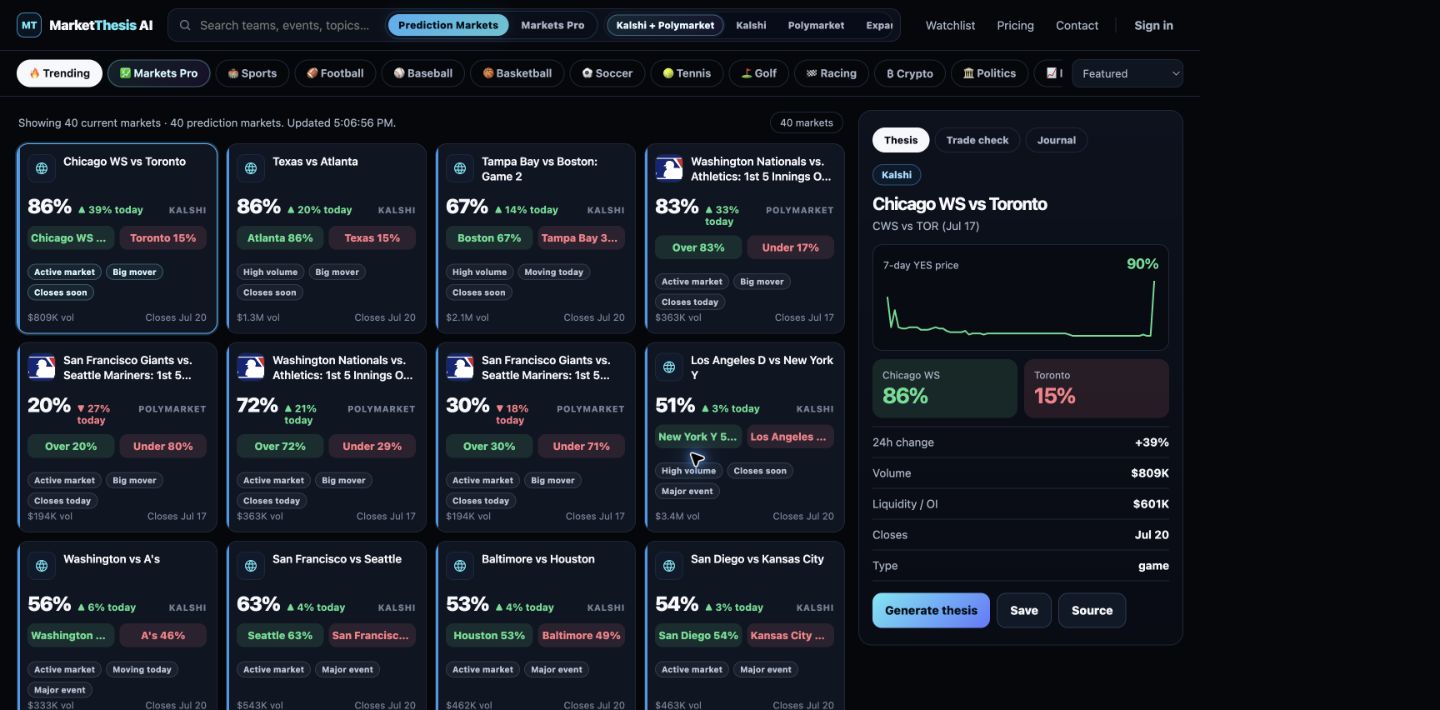
For traders, analysts, and research agents
Market Thesis AI
Turn live prediction markets, equities, indexes, and crypto signals into a structured thesis.Explore Market Thesis AI ↗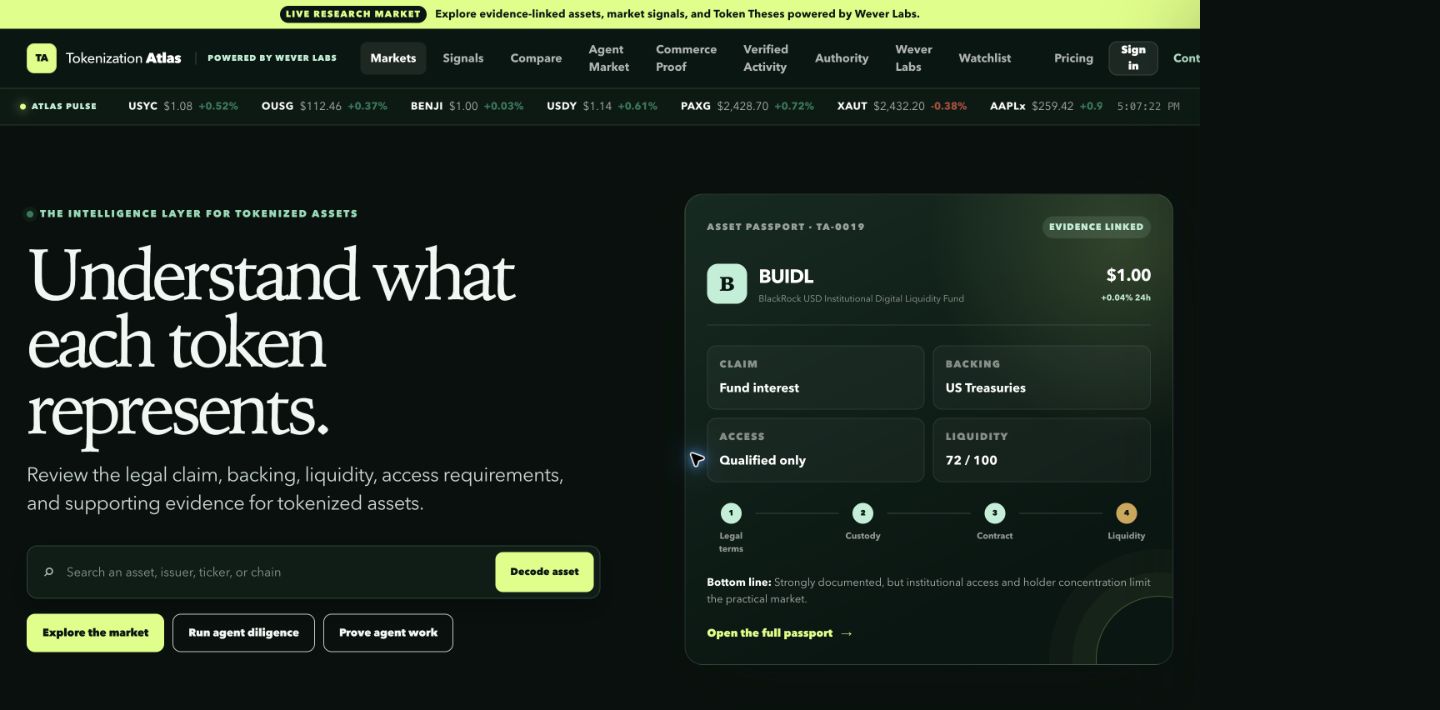
For investors, analysts, and diligence agents
Tokenization Atlas
Inspect the legal claim, backing, access, liquidity, and evidence behind a tokenized asset.Open Tokenization Atlas ↗Agent Store
Callable products and rails for agents.
Find 41 live products for control, scoped work, evidence, handoffs, commerce, receipts, and connection. Every listing has a public page and working interface.
- Wever PayAgentic exchange
- Service ResolverCommerce and connection
- Delegated AuthorityControl and trust
- Commerce ProofEvidence and receipts
- Work Order RailWork and handoffs
Commercial Agent Network
Bounded authority in. Verifiable work out.
Principals define outcomes and limits. Agents perform scoped work, attach evidence, undergo independent verification, and return signed receipts. The public Observatory exposes read-only network facts without granting execution authority.
- 01PrincipalDefines the outcome
- 02AuthorityConstrains the agent
- 03WorkProduces evidence
- 04VerificationChecks the result
- 05ReceiptRecords the outcome

Founder
David H. Wever, M.A.
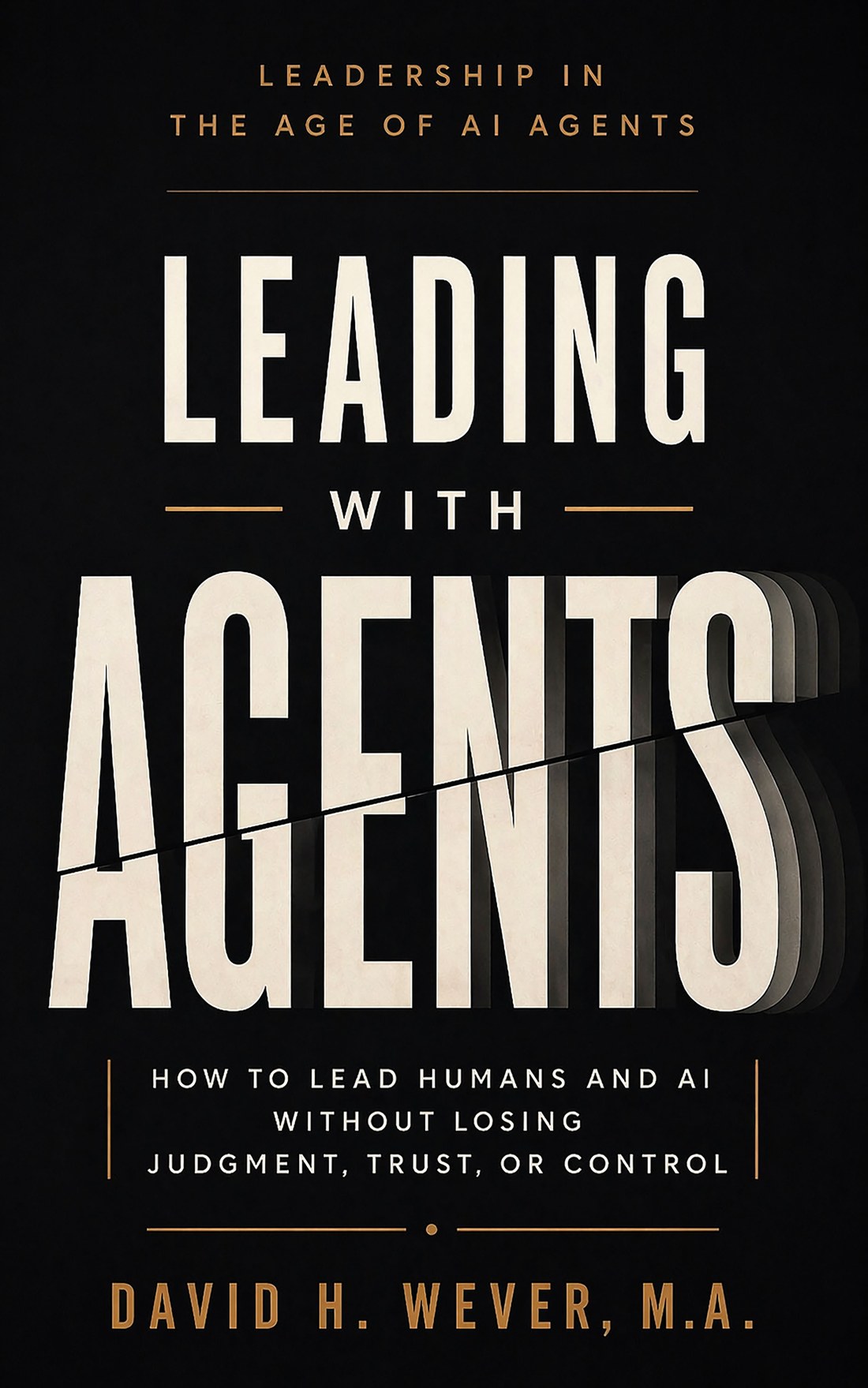
Founder of Wever Labs and author of Leading With Agents. David builds products around bounded execution, clear human judgment, and evidence that survives the handoff.
Book
Leading With Agents
The public thesis behind Wever Labs: humans lead with intent and judgment, agents carry execution, and products give both sides a usable path.
About Wever Labs
Infrastructure and products for agents that do real work.
Wever Labs builds the layer between human intent and agent execution. Each system is designed to be useful to a person, callable by an agent, and verifiable by an independent party.
Open the company page ↗