Leadership in the age of AI agents

Leading With Agents

A field manual for the scarce layer in the agentic economy: judgment, taste, trust, and direction.

As execution gets cheaper, the moat moves. The scarce work is deciding what deserves to be built, who deserves to be served, what must be protected, and which outputs earn trust. Leading With Agents is the public thesis behind Wever Labs: agents perform more of the work; judgment shapes the operating system.

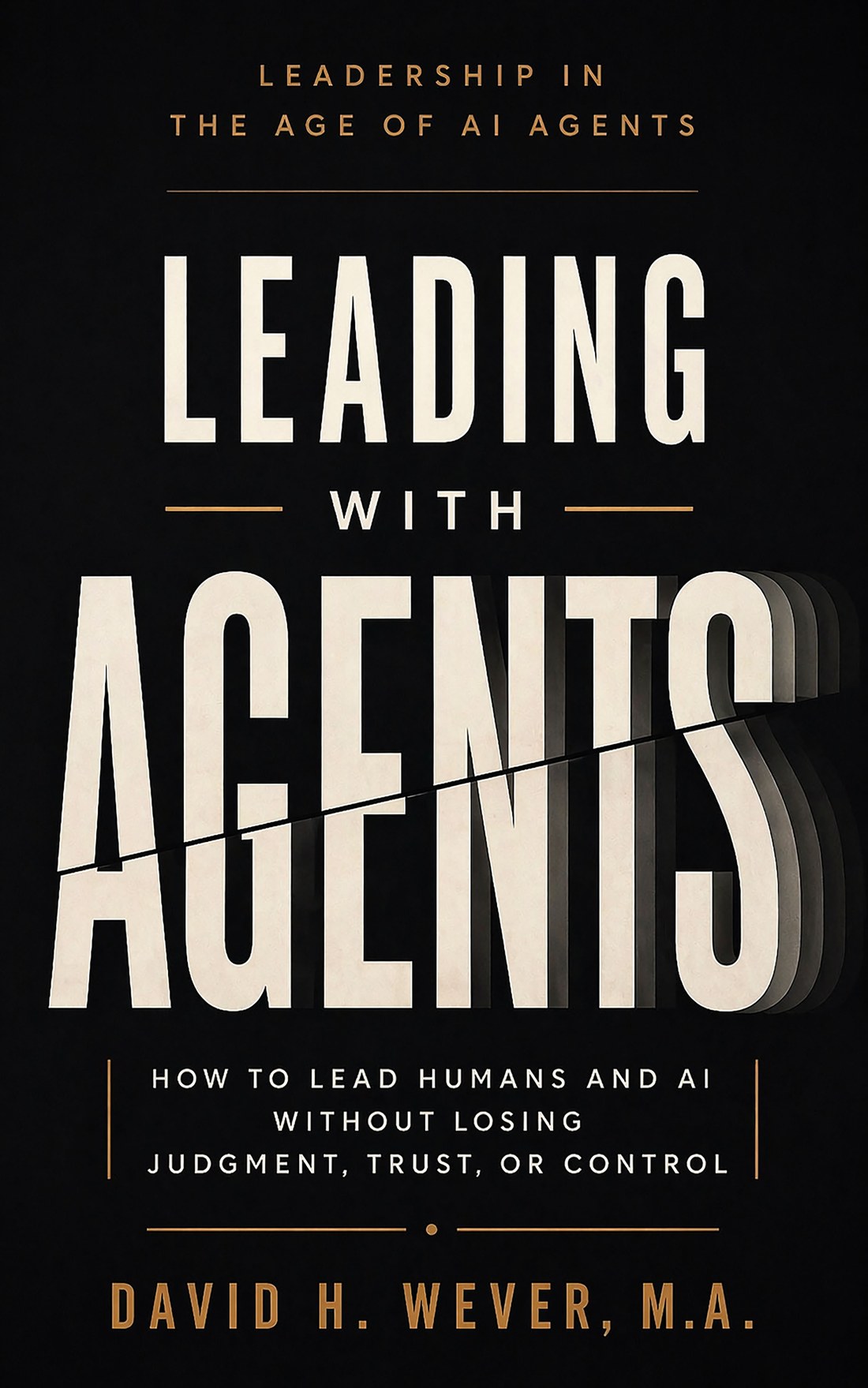
Leading With Agents book cover by David H. Wever, M.A.
From book to company

The book names the judgment layer. Wever Labs builds the agent-native operating machine.

Agentic systems can research, draft, calculate, review, route, summarize, and execute. The advantage comes from the operating protocol around them: purpose, records, workflow state, outputs, audit trails, learning loops, and the judgment to know which work is worth doing.

01

Judgment becomes scarce.

When execution is abundant, leadership shifts toward discernment: what to build, what to ignore, what to protect, and what standards the machine must meet.

02

Agents become the workforce.

Wever Labs is being built as an agentic company: research agents, product agents, build agents, outreach agents, pilot agents, and improvement agents working through structured operating systems.

03

Taste becomes infrastructure.

The company’s edge lives in the quality of its choices, workflows, data models, agent passports, feedback loops, and product taste. That is where the moat compounds.

The Wever Labs moat

Judgment encoded into operating systems.

What to build

Execution is no longer the whole bottleneck. The harder question is which workflow deserves a product, which pain is real, and which system can learn faster than the market around it.

Who to serve

Agentic infrastructure has to attach to real operators with real repeated pain: records, state, exceptions, outputs, releases, and audit trails.

What to refuse

The machine needs boundaries. Wever Labs will build around clear agent passports, visible workflow state, durable logs, and standards for outputs that deserve trust.

How the system learns

Every product, pilot, ticket, agent run, build result, and customer workflow should teach the company. The intelligence moat comes from the learning loop.

Operating proof

Wever Labs OS turns the thesis into agent-native operating tools.

DistributionOps proved the first operating pattern for holder records, position ledgers, cash-flow events, notices, exceptions, exports, agent reviews, closeout summaries, run packages, and audit trails. PacketOps extends the same model into packet workflows: required documents, missing items, readiness reviews, next actions, delivery packages, and audit history. Together, they show how Wever Labs turns judgment, workflow state, and agents into agent-native workflow infrastructure.

Read the thesis

Start with the book. Then watch the operating system run.

Leading With Agents is the public doorway into the Wever Labs worldview: agents run the work, judgment sets the direction, and the company compounds through the operating systems it builds.